


Jump Starters in Harbor Freight vs Hulkman: Is the Extra Money Actually Worth It?
In this article, we'll cover:
- Real-World Starting Power: Does It Actually Crank Your Engine?
- Everyday Usability: Which One Feels Less Frustrating?
- Durability and Long-Term Value: Cheap Now or Reliable Later?
- Which Jump Starter Should You Actually Buy?
Real-World Starting Power: Does It Actually Crank Your Engine?
If you live in the U.S., you've probably walked into a Harbor Freight at some point. Their jump starters are cheap, easy to find, and seem like a no-brainer when your battery dies. A lot of people — DIY guys, ranchers, and regular commuters — grab one as their first car jump starter. But after using them for a while, many start noticing the downsides: they struggle in cold weather, take forever to recharge, and sometimes just quit after a few uses.
When it comes to a car jump starter, the big question is simple — will it start my vehicle when I really need it?
Harbor Freight's Viking series is their biggest seller. The 2000A model claims it can handle up to 8L gas and 6L diesel engines. In reality, plenty of owners say it works okay on small cars but struggles with bigger trucks and diesels, especially in cold weather. On Reddit's r/harborfreight and r/MechanicAdvice, you'll find multiple stories of people who couldn't get their diesel pickup to turn over with the Viking, even when it was fully charged. One Iowa farmer mentioned trying three times on his 6.7L diesel with no luck and eventually having to call for a tow.
Hulkman's Alpha series (especially the Alpha Pro 2000A and Alpha Ultra 1000A) feels noticeably stronger in real use. Owners consistently report they crank larger gas and diesel engines more reliably, even when temperatures drop below zero. Lithium batteries hold their power better in the cold, so Northern drivers often say Hulkman units just work when Harbor Freight ones don't. One long-time user in a Jeep forum said his Hulkman has started multiple vehicles flawlessly for over three years, including in freezing conditions.
Quick takeaway:
- Harbor Freight Viking is fine for light, occasional use on smaller cars.
- Hulkman gives you more confident, consistent power — especially useful for trucks, diesels, or cold climates.
Everyday Usability: Which One Feels Less Frustrating?
Convenience matters a lot when you're standing outside in the cold or rain trying to get your car going.
Harbor Freight's Viking models have basic safety features, an LED light, and USB ports for charging your phone. But users often complain that the USB charging is painfully slow and the simple lights don't clearly show how much battery is left. One California commuter shared that her Viking took over an hour to charge her phone to just 30% while she was stuck at a rest stop.
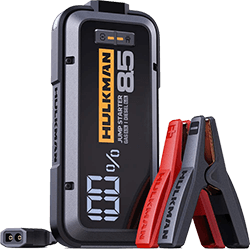
Hulkman takes a much more user-friendly approach. The Alpha models have a clear digital screen that shows exact battery percentage and any error codes — no more guessing. The fast PD 65W charging fills the unit in about 75 minutes, and you can charge laptops or other devices at the same time. It's also much lighter and more compact, making it easy to toss in the glovebox. Owners frequently mention how the clear display and quick charging make Hulkman feel like a proper tool instead of a cheap gadget.
Many people who switched say the small details — like the readable screen and fast recharge — make Hulkman way more pleasant to actually use day to day.
Durability and Long-Term Value: Cheap Now or Reliable Later?
Harbor Freight wins on price — you can often pick up a Viking for under $150. But durability is where things get tricky. Many owners report cracked plastic cases, loose cables, and units that stop working after just a year or two. In online forums, several people mentioned their Harbor Freight jump starter developed bad connections or charging problems fairly quickly, with only a one-year warranty.
Hulkman costs more upfront, but it's built tougher. The case is waterproof and dustproof (IP65 rating), the cables are thicker, and the clamps feel more solid. Owners regularly share stories of their Hulkman surviving years of rough use on job sites, farms, and off-road trips. The warranty is two years (extendable to three with registration), and customer support tends to be more responsive.
Forum users who compared both often say: if you only need a jump starter once or twice a year, Harbor Freight is okay. But if you drive a truck, live in a cold area, or use it regularly for work or travel, Hulkman ends up being the smarter long-term choice.
Which Jump Starter Should You Actually Buy?
It really depends on your life:
If you drive a small car in a warm climate and only need a jump starter occasionally, a Harbor Freight Viking can do the job without breaking the bank.
If you own a truck or diesel, live up North, work on a farm, or just want something you can truly count on, Hulkman is usually the better pick.
At the end of the day, a good car jump starter isn't just another gadget in your trunk — it's peace of mind when things go wrong. Hulkman focuses on honest power, smart features, and real durability, which is why so many people end up upgrading from their Harbor Freight unit.
Have you tried both Harbor Freight and Hulkman jump starters? What was your experience? Drop your honest thoughts in the comments — it helps other drivers decide.