


Pickup Trucks vs. Jeeps: Decoding the Classifications for American Drivers
From dusty Texas ranch roads to Utah's rugged trails, pickup trucks and Jeeps are more than just vehicles — they're symbols of American life, blending utility, adventure, and independence. Yet many drivers still mix up their classifications: Is a Gladiator a "Jeep truck" or a true pickup? Why does GVWR matter more for pickups than for Jeeps? This guide clarifies it all — starting with pickup classifications by GVWR, then Jeep's lineup by off-road focus, and finally the key differences in structure and use cases. Whether you're hauling gear on a farm, tackling off-road paths, or commuting in the city, you'll know exactly which fits your lifestyle.
In this article, we’ll cover:
- How Are Pickup Trucks Classified?
- How Are Jeeps Classified?
- Key Differences: Structure, Purpose, and Best Scenarios
- Choosing the Right One: Match to Your American Lifestyle
How Are Pickup Trucks Classified?
Pickup trucks in the U.S. are primarily classified by Gross Vehicle Weight Rating (GVWR) — the maximum safe total weight (curb weight + passengers + cargo + trailer tongue weight). The EPA and DOT use this system, dividing trucks into classes that align with duty levels, engine size, tire specs, and intended use.
Light-duty / Compact Pickups (GVWR under ~6,000–8,500 lbs, often Class 1–2a): These focus on urban efficiency and light hauling. Engines range 2.0L–2.5L turbo, with 15–17-inch tires. The Ford Maverick leads here — its 2.0L EcoBoost delivers solid fuel economy while handling Home Depot runs or weekend camping in places like Los Angeles or New York. Great for city commuters who want truck utility without full-size bulk.
Mid-size Pickups (GVWR roughly 6,001–10,000 lbs, Class 2): The sweet spot for many families and outdoor enthusiasts. Engines 2.3L–3.5L, tires 16–18 inches (up to 20 on off-road trims). Toyota Tacoma stands out with its 3.5L V6 and trail-ready tires like 265/70R17, excelling in Colorado's mountains or Midwest daily driving — towing small trailers or ATVs while staying maneuverable.
Full-size / Half-ton Pickups (GVWR 8,501–10,000+ lbs, Class 2b–3): America's best-sellers for versatility. Engines 3.5L–5.7L (diesel options), tires 17–22 inches. Ford F-150 dominates — its 2.7L EcoBoost tows up to 13,000+ lbs, making it ideal for Texas farms, construction sites, or family RV trips across wide-open spaces.
Heavy-duty / 3/4-ton and 1-ton Pickups (GVWR over 10,000 lbs, Class 3+): Built for serious work. Diesel engines (6.6L–6.7L Cummins or Power Stroke), heavy-duty 17–20-inch tires. Ram 3500 or Ford F-350 handle 30,000+ lb towing for large trailers, horse haulers, or commercial loads — staples on Western ranches and job sites.
This GVWR-based system ensures trucks match federal regs, licensing needs, and practical demands — from urban efficiency to extreme hauling.
How Are Jeeps Classified?
Jeep's lineup emphasizes off-road capability and lifestyle positioning over strict weight classes. Each model has a clear role, from hardcore trails to daily comfort, all sharing iconic 4x4 systems and rugged design.
Jeep Wrangler: The pure off-road icon. Engines mainly 2.0L turbo (some 3.6L V6), tires 17–18 inches (Rubicon's 285/70R17 mud-terrains). Two-door for extreme rock crawling; four-door Unlimited for family use. Removable top/doors, 2.72:1 low-range gearing, and up to 33.5-inch water fording make it unbeatable in Moab or Florida beaches.
Jeep Gladiator: Jeep's only true pickup — mid-size with Wrangler DNA. 3.6L V6, 255/70R18 tires, ~11-inch ground clearance. 5-foot bed hauls bikes or gear while delivering Rubicon-level off-road prowess — perfect for California adventurers who need utility without sacrificing trails.
Jeep Grand Cherokee: Luxury-focused with capable off-road traits. 2.0L turbo (4xe plug-in hybrid options), 20–21-inch tires. Unibody construction, Quadra-Trac systems — excels in city commuting (New York/Chicago) with strong highway manners and occasional trails.
Jeep Compass and Renegade (though Renegade phased out post-2023, Compass carries the compact torch): Small SUVs for urban/suburban use. 1.3L–2.0L engines, 17–18-inch tires, standard AWD. Great for rainy Seattle or Portland winters — compact size aids parking, with enough grip for light snow or gravel.
Jeep's approach prioritizes adventure heritage over weight ratings.
Key Differences: Structure, Purpose, and Best Scenarios
The core divide is in construction and priorities:
Body Structure — Most pickups use body-on-frame (BOF) — separate ladder frame for superior rigidity, towing strength, and off-road flex. Jeeps like Wrangler/Gladiator follow suit for trail toughness. Grand Cherokee/Compass use unibody (integrated body/frame) for better on-road comfort, handling, and efficiency — but less extreme load/off-road durability.
Primary Purpose — Pickups excel at hauling/towing — open beds, high payload/towing ratings (F-150 up to 13,500+ lbs, HD models 30,000+). Jeeps focus on off-road versatility — approach/departure angles, locking diffs, low-range gearing (Wrangler's legendary). Gladiator bridges both with a bed.
Performance Focus — Pickups emphasize torque, payload, and towing (diesel for heavy work). Jeeps prioritize articulation, ground clearance, and 4x4 systems for trails.
Scenario matchups:
- Farm/ranch work or heavy towing → Body-on-frame full-size/HD pickup (F-150, Ram 3500).
- Extreme off-roading → Wrangler or Gladiator.
- Luxury daily + light trails → Grand Cherokee.
- Urban/compact needs → Compass or Maverick-style compact pickup.
Choosing the Right One: Match to Your American Lifestyle
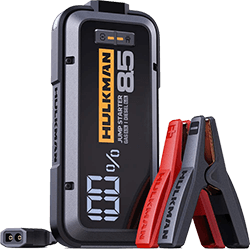
Different vehicle models come with different engine displacements, and owners need to choose a suitable car jump starter based on their actual needs to match the proper peak current. Larger-displacement engines, especially V6, V8, and diesel engines, require jump starters with higher peak current for reliable starting.
- Frequent towing/hauling (farm, construction, boats/RVs) → Pickup, diesel HD for Northern winters or gas mid/full-size for South.
- Hardcore trails/adventure → Wrangler/Gladiator for unmatched capability.
- Comfortable family/commute with occasional dirt → Grand Cherokee or mid-size pickup.
- City efficiency/small footprint → Compact pickup or Compass.
In 2026, both categories evolve — hybrids boost efficiency, tech adds safety — but the essence remains: pickups for practical American grit, Jeeps for adventurous spirit.
Which do you lean toward — a truck's utility or a Jeep's trail prowess? Share your ride and stories below!