


CCA vs. Peak Amps: The Real Difference and Why It Matters for American Drivers
This article dives deep into the definitions, the four core differences, real-user scenarios from forums and tests, additional comparisons (lithium vs. lead-acid in cold weather), practical safety tips, and smart buying logic. We'll also touch on emerging trends like integrated smart tech in jump starters and how climate change is influencing battery performance. By the end, you'll confidently pick the right jump starter for your climate, vehicle, and driving habits — whether you're a daily commuter in California or a winter adventurer in the Rockies.
In this article, we’ll cover:
- What Do CCA and Peak Amps Actually Measure – And Why the Confusion Persists
- The 4 Key Differences That Impact Real-World Performance
- Which Spec Should You Trust – Real Scenarios from U.S. Drivers
- Lithium vs. Lead-Acid Jump Starters: Cold-Weather Showdown and Beyond
- Safety Tips and Avoiding Costly Pitfalls
What Do CCA and Peak Amps Actually Measure – And Why the Confusion Persists?
Picture this: It's January 2026, and a brutal cold front has swept across the Midwest. In Minnesota, temperatures plummet below -20°F overnight, turning your reliable Ford F-150's lead-acid battery into a sluggish brick. Or maybe you're on a remote stretch in Arizona when your SUV's battery finally gives out after a long day of off-roading. In either scenario, your portable jump starter (also called a jump box, battery booster, or emergency jump pack) is the difference between getting home and calling for a tow.
But here's the catch that trips up so many U.S. drivers: When comparing specs, lead-acid vehicle batteries shout about Cold Cranking Amps (CCA), while lithium-powered jump starters flaunt peak amps (peak current). They both promise "starting power," yet they're measuring very different things. Confuse the two, and you might buy a unit that fails in the cold, overpay for unnecessary specs, or worse — risk damaging your vehicle's electronics.
Cold Cranking Amps (CCA) is a rigorous, standardized test created specifically for automotive lead-acid batteries. It measures the continuous current (in amps) a battery can deliver for a full 30 seconds at 0°F (-18°C), while maintaining at least 7.2 volts (for a 12V system). This test replicates the real challenge of starting an engine in freezing weather, when oil thickens, chemical reactions slow, and the starter motor demands sustained power. The Society of Automotive Engineers (SAE) developed this standard decades ago to ensure batteries could handle the demands of internal combustion engines, and it's still the gold standard for vehicle batteries today.
For example, a typical Ford F-150 factory battery might rate 600–800 CCA, meaning it can hold that output long enough to crank a V8 or diesel through multiple compression cycles — even in brutal Northern winters. In warmer climates, like the Southwest, lower CCA ratings might suffice since the cold factor is minimal, but in places like Michigan or Wisconsin, skimping on CCA can mean repeated no-starts during polar vortex events.
Peak amps, by contrast, is the go-to spec for modern lithium-ion portable jump starters. It represents the absolute maximum instantaneous current the unit can burst out — usually for just 1–3 seconds — tested at comfortable room temperature (around 77°F/25°C). There's no mandatory cold-weather component or strict duration requirement, so manufacturers can highlight impressive numbers like 2000A+ peak. This spec emerged with the rise of lithium tech in the 2010s, focusing on quick, high-energy delivery rather than endurance.
Real users on Reddit often express frustration with this mismatch. One driver shopping for a jump starter noted confusion over ratings like 336 CCA on a Harbor Freight unit versus high peak claims on Amazon models, questioning if peak amps alone could handle their 2.0L engine reliably. Another in r/VEDC highlighted how lithium packs shine for quick bursts but can't sustain like lead-acid, sharing a story of a budget peak-amps unit failing after two short cranks in mild cold.
The confusion lingers because marketing loves big numbers — peak amps sound powerful — but they don't tell the full story for sustained cranking or extreme cold. As electric vehicles and hybrids grow in 2026, with more 12V auxiliary batteries, understanding these specs becomes even more critical to avoid mismatches.
The 4 Key Differences That Impact Real-World Performance
Testing Environment — CCA requires precise -18°C testing to match harsh U.S. winters (think Michigan blizzards or Montana mountain passes). Peak amps skips cold testing, so lithium units often surprise in sub-zero conditions due to better inherent low-temp chemistry. For instance, lithium-iron-phosphate (LiFePO4) cells in newer models maintain efficiency down to -4°F, whereas lead-acid can lose up to 50% capacity.
Output Duration — CCA demands 30 seconds of steady delivery, crucial for diesels or high-compression engines that need longer cranking. Peak amps is a short "explosive" surge — perfect for most gas cars but not ideal for prolonged attempts. This is why heavy-duty truckers in states like Texas prefer high-CCA lead-acid for their rigs, while urban drivers opt for peak-focused lithium for quick fixes.
Primary Application — CCA evaluates built-in vehicle batteries for daily reliability. Peak amps suits emergency jump starters, providing a quick boost to any dead 12V battery (sedans, trucks, boats) without needing exact CCA matching. In 2026, with more EVs incorporating 12V systems for accessories, peak amps help bridge the gap during roadside emergencies.
Voltage Stability & Protection — CCA insists voltage stays above 7.2V during the test to protect the starter motor. Peak amps prioritizes max burst, with modern lithium units relying on smart electronics (overheat protection, auto-shutoff) to avoid damage. This built-in safety is a game-changer, as older lead-acid jumpers lacked such features and could spark fires if mishandled.
From 2026 tests by Road & Track and Car and Driver, lithium jump starters deliver reliable bursts even in cold, often holding 80%+ output where lead-acid plummets.
Quick comparison points:
- CCA excels in sustained cold performance for vehicle batteries, ideal for long-term reliability.
- Peak amps shines in instant delivery, lighter weight, and better moderate-cold retention for lithium jump boxes.
Which Spec Should You Trust – Real Scenarios from U.S. Drivers
Vehicle Battery Replacement: Always prioritize CCA. Northern drivers (New York, Montana) need 600A+ for reliable starts; diesels or heavy trucks push toward 800A+. In warmer Southern states (Florida, Texas), 500A+ suffices since cold rarely factors in. A Wisconsin forum user recounted swapping to a 750 CCA DieHard battery after repeated winter failures with a 500 CCA stock unit, noting immediate improvements in cranking speed during -15°F mornings.
Portable Jump Starter Purchase: Focus solely on peak amps — lithium models don't carry CCA ratings. For compact cars/SUVs: 800–1500A peak covers most. Trucks like F-150s or larger gas engines: Aim for 1500–2500A+. Diesels: 2000A+ recommended.
Real-user stories illustrate this perfectly. A Colorado skier shared how their 1000A peak lithium unit revived a low-CCA battery during an Aspen trip freeze — instant start despite sub-zero temps, no CCA equivalence needed.
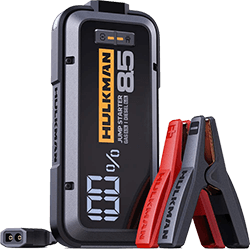
In milder climates like California, lower peak (500–1000A) units handle daily mishaps (forgotten lights draining the battery). For heavy-duty needs, 2026 models like Hulkman Alpha or NOCO Boost X series earn praise for cold-weather consistency, with users highlighting features like USB-C recharging and integrated air compressors for added utility on long drives.
Another scenario: An Arizona off-roader described using a 1500A peak jump box to restart their Jeep after a desert battery drain from winching — the quick burst got them moving without waiting for help, emphasizing peak's role in remote, non-cold emergencies.
Lithium vs. Lead-Acid Jump Starters: Cold-Weather Showdown and Beyond
Lead-acid jump boxes (older, bulkier models) lean on CCA-like sustained output but suffer heavy self-discharge and weight (often 15–30 lbs). They were popular in the early 2000s for their low cost, but in 2026, lithium units dominate for portability (under 5 lbs), longer charge hold (months vs. weeks), and superior cold tolerance — some retain strong bursts at 4°F.
Tests show lithium avoids thermal issues in short bursts, while lead-acid can deliver longer if needed (though rare for portables). AutoZone comparisons highlight lithium's density advantage: more power in less space, plus extras like phone charging during outages.
Common mistake: Assuming higher peak always beats cold performance. It depends more on battery type — NCM often trumps standard lithium in freezes. Looking ahead, 2026 trends include app-connected jump starters that monitor charge via Bluetooth, alerting you to recharge before a trip, which could revolutionize reliability in variable climates influenced by more frequent extremes from climate change.
Safety Tips and Avoiding Costly Pitfalls
Limit cranking to 3–5 seconds per attempt; wait 30+ seconds between tries to prevent overheating starter or electronics. Repeated long cranks can warp components or drain the jump starter prematurely.
Always connect properly: red to positive, black to ground (not negative post if corroded) to avoid sparks or reverse polarity damage — modern units have indicators, but double-check.
Store jump starters moderately (avoid trunk extremes); recharge every 1–3 months, and test before winter. A forgotten low-charge unit is as useless as no unit at all.
Myth bust: Peak amps don't need to match/exceed CCA — 800A peak often suffices for 700 CCA batteries as a boost. Overbuying leads to unnecessary bulk and cost.
Additional pitfall: Ignoring compatibility — ensure your jump box suits 12V systems (most cars) and avoid using on hybrids/EVs without checking manuals, as high-voltage systems require specialized tools.
Pro safety hack: Wear gloves and eye protection; keep a fire extinguisher handy for rare lead-acid acid leaks.
Lithium jump starters offer the best balance for most American drivers: quick, reliable bursts without CCA obsession, plus multi-function perks for camping or emergencies. Got a winter rescue story or a jump box that underperformed? Share below — your experience could save someone else!