


Can a Jump Starter Revive Lithium Battery Vehicles and Tools?
Jump starters are household names for rescuing a dead car battery—but can the same devices revive lithium battery vehicles and power tools? Short answer: sometimes yes, sometimes no. The difference comes down to battery architecture, voltage, and how the device boots its control systems. This blog walks U.S. consumers through the logic behind lithium battery starts, which scenarios a jump starter can safely handle, which it absolutely cannot, and practical steps to avoid costly mistakes.
In this article, we’ll cover:
- Why the startup logic matters
- When a jump starter can help
- When a jump starter will not—and must not—be used
- Choosing the right jump starter
- Practical steps to restart a low-voltage lithium device safely
- What can go wrong—and how to avoid it
Why the startup logic matters
Gas cars and lithium-powered devices don’t start the same way. A gasoline vehicle relies on a starter motor that cranks the engine; it’s a high-current event the 12V lead-acid battery services directly. By contrast, lithium battery devices fall into two broad categories that determine whether a jump starter is useful:
Low-voltage lithium systems (typically 12V or 24V): common in handheld power tools, smaller electric scooters, many UTVs/UTVs with auxiliary 12V systems, and some lawn equipment. The device’s battery directly powers the control board and motor; a compatible external 12V jump starter can often provide the wake-up current these systems need.
High-voltage lithium systems (48V and above): typical of modern electric cars, larger commercial equipment, and industrial machines. These systems use a high-voltage battery pack (hundreds of volts) governed by a Battery Management System (BMS). A 12V jump starter cannot recharge or substitute for the high-voltage pack. At best it can revive a depleted auxiliary 12V circuit—if the manufacturer allows it—and at worst it can damage sensitive electronics.
Think of a homeowner charging a DeWalt 20V lithium mower battery (low-voltage tool) versus a Tesla Model 3 (high-voltage EV). The mower’s on-board control and motor will accept 20V nominal from its battery and often a compatible external supply for troubleshooting. The EV depends on its 300–400V pack; the tiny 12V auxiliary battery only wakes vehicle electronics and cannot power the drive system.
When a jump starter can help
If your device uses a low-voltage lithium battery and the manufacturer permits external temporary power, a quality jump starter can be an effective emergency tool. Typical use cases in U.S. households and workplaces:
Lithium power tools: Cordless drills, chainsaws, and trimmers with removable 12V–24V packs sometimes sit unused and become too discharged to operate. A jump starter with appropriate voltage output and adapters can “wake” the tool’s pack for immediate use.
Small electric rideables and UTVs: Electric scooters, e-bikes, and small off-road UTVs that operate on 12V or 24V systems can often be restarted with a jump starter that supplies correct voltage and sufficient peak current.
Auxiliary 12V systems on RVs and campers: Many modern lithium-equipped RVs have a low-voltage auxiliary battery that powers interior lights and BMS wake signals. If the auxiliary is flat, a jump starter can restore cabin functions and let the BMS re-enable the high-voltage system—provided the RV maker’s guidance allows this.
When a jump starter will not—and must not—be used
High-voltage machines and devices with integrated, non-serviceable batteries are not candidates for a standard jump starter. Connecting one can lead to expensive failures or safety incidents. Do not attempt a jump-start in these cases:
High-voltage electric vehicles and large industrial equipment: EVs (e.g., Tesla, Ford Mustang Mach-E, Chevrolet Bolt) and machines with 48V+ packs require their specific chargers and safety procedures. A 12V jump starter cannot charge the propulsion battery and may damage the BMS, contactors, or motor controllers.
Large commercial lithium equipment: Forklifts, excavators, and other heavy machines often have complex charging systems and isolating contactors. Unauthorized external connection risks catastrophic failure.
Sealed consumer electronics: Tiny devices (smartwatches, compact Bluetooth speakers, sealed power banks) have small capacity cells and delicate charging circuits. High output jump starters will overwhelm and destroy them.
Two quick rules to remember
Rule 1: Check the device voltage. If the device is 12V/24V and allows external power, a jump starter with matching output may work. If the device is 48V+ or uses a high-voltage battery pack, do not use a consumer jump starter.
Rule 2: Consult the manual first. Manufacturer guidance on auxiliary battery procedures and BMS behavior is decisive—never improvise on high-voltage systems.
Choosing the right jump starter
Not all jump starters are created equal. For safe use with compatible lithium battery devices, look for:
Multiple output voltages and smart adapters: Some models provide 12V auxiliary ports, 24V outputs, and accessory adapters for tool packs.
Built-in protection features: Short-circuit protection, reverse polarity alarm, over-voltage and over-current cutoffs, and thermal management help prevent damage.
Peak current and continuous rating: Tools with high motor inrush demand a jump starter with sufficient peak current (1000A-2000A is common for vehicle jump starters) and sensible auxiliary outputs for small devices.
Trusted brands and specs: Choose jump starters with clear specifications and customer support in the U.S. for warranty and safety guidance.
Practical steps to restart a low-voltage lithium device safely
1.Read the manual—find voltage and BMS notes. If the manual forbids external power, stop.
2.Power off the device and remove any removable battery pack if possible.
3.Use manufacturer adapters when available; avoid jury-rigging direct cell connections.
4.Connect positive to positive and negative to negative. Ensure secure clamp contact and no frayed wires.
5.Apply power briefly to wake control electronics—do not attempt to “charge” a lithium pack long-term with a jump starter.
6.Once the device powers up, remove the jump starter and recharge the internal battery with the correct charger as soon as possible.
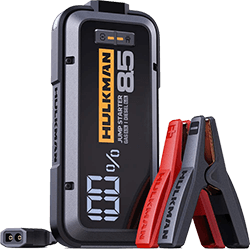
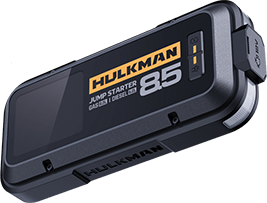
Temperature affects lithium battery behavior. In cold climates like Minnesota or Michigan, low-voltage lithium packs may display reduced capacity or fail to deliver required starting current. Bringing the battery and jump starter into a warm environment before attempting a restart improves success rates. Or choose a jump starter with preheating function like Hulkman Alpha 85S. Conversely, avoid applying high current to hot batteries. Storage state-of-charge matters too: lithium cells left discharged for long periods can enter protective low-voltage states; in many cases they require controlled charging rather than a high-current jump.
What can go wrong—and how to avoid it
Damaging a BMS: The most common risk on high-voltage systems is damaging the BMS or contactors by applying inappropriate voltages. Fix: never connect a jump starter to the high-voltage pack; use manufacturer-approved recovery methods.
Reverse polarity and short circuits: Misconnecting clamps can fry electronics. Fix: use jump starters with polarity protection and double-check connections.
Overstressing small cells: Feeding too much current into tiny devices will destroy them. Fix: use only chargers and power supplies designed for the device’s charging protocol.
Identify the device type and voltage (refer to manual and nameplate). If 12V/24V and the manufacturer allows external power, choose a jump starter with matching output and safety features. For high-voltage machines and EVs, call roadside assistance or the equipment dealer; do not improvise. After any emergency jump, recharge the original battery with the correct charger and have the battery and BMS inspected if behavior is abnormal.
Jump starters are indispensable for many everyday situations with low-voltage lithium battery devices—from power tools on the farm to scooters in city alleys. But they’re not a universal cure. Understanding whether a device is low-voltage or part of a high-voltage system, consulting the owner manual, and using a properly specified jump starter are the keys to turning a useful gadget into a reliable rescue tool—without turning an expensive battery pack into an expensive paperweight.
Have you used a jump starter on a lithium tool, scooter, or camper auxiliary battery? Share your experience and tips—what worked, what failed, and which jump starter you trusted.