


Will Too-High Peak Amps Damage Your Car Battery? Peak vs. Working Current in Jump Starters Explained
For American drivers, a portable jump starter (or jump box, battery booster) is often the go-to lifesaver — whether you're facing a frozen battery in Michigan's brutal winters or a sudden dead battery on a remote California highway. But shopping for one brings up two confusing specs: peak current (peak amps) and working current (continuous or cranking current). Many worry: Does an ultra-high peak amps rating (like 4000A or 8000A) risk damaging your car's lead-acid battery?
In this article, we’ll cover:
- What Are Peak Current and Working Current — And How Do They Differ?
- Does Too-High Peak Current Damage Your Lead-Acid Battery?
- Practical Buying Guide: Which Spec to Prioritize and How to Choose for Your Scenario
- Avoiding Myths and Final Tips for Worry-Free Use
What Are Peak Current and Working Current — And How Do They Differ?
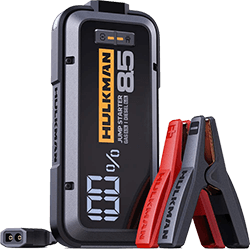
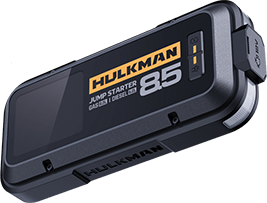
Peak current (peak amps) is the maximum burst of power a jump starter can deliver in an instant — typically lasting just 1–3 seconds. It is measured at room temperature and represents the device's "explosive sprint" to overcome initial engine resistance. Popular models like the NOCO Boost GB70 or Hulkman Alpha 85 often rate around 2000A peak, while some heavy-duty ones push 2500A.
Working current (also called continuous starting current, cranking amps, or sustained output) is the steady current the jump starter can provide for longer — usually 10–30 seconds — without overheating itself or causing issues. This matches the real cranking process, where the starter motor draws consistent power (e.g., 200–300A for a Toyota Corolla, 300–500A for a Ford F-150).
The difference is like comparing a sprinter's explosive start to a marathon runner's steady pace: Peak current gets you over the hump quickly; working current keeps things moving until the engine fires. Lithium jump starters use built-in Battery Management Systems (BMS) to regulate output, ensuring the device only supplies what the vehicle needs — not dumping the full peak indiscriminately.
Real-world tests and user experiences confirm peak ratings are often marketing-driven. A detailed YouTube analysis demonstrated that many "peak amps" claims are extremely short bursts (sometimes measured in milliseconds), while actual engine starting requires several seconds of sustained power — making peak less meaningful than advertised for real use.
Does Too-High Peak Current Damage Your Lead-Acid Battery?
Qualified jump starters with high peak amps do not damage lead-acid batteries when used correctly. Here are the key reasons:
First, the duration of the peak burst is extremely short — only 1–3 seconds. Lead-acid batteries routinely handle short high-current spikes during normal cold starts. For example, many U.S. vehicles have batteries rated at 600–800 CCA (Cold Cranking Amps), meaning they are designed to deliver (and withstand) 600–800A or more for short periods in freezing conditions without harming the plates or electrolyte.
Second, modern lithium jump starters rely on advanced BMS technology that automatically matches the output to the vehicle's actual demand. A California driver tested a 2000A peak unit (originally intended for trucks) on a small Toyota Corolla. The BMS regulated the current down to approximately 300A during the crank — the engine started smoothly, and the battery showed no signs of stress or damage afterward.
Third, the vehicle’s starter motor only draws the current it needs based on electrical resistance (Ohm's Law). A high-peak jump starter simply provides extra headroom for tough conditions; it does not force excess current into the battery. Forum users frequently report the same experience: no damage occurs from high-amp lithium units, even when used on smaller engines — the battery acts as a natural buffer.
What actually risks damage to the lead-acid battery is not high peak amps — but problems such as:
- Prolonged cranking attempts (beyond 3–5 seconds per try)
- Using a faulty or no-BMS unit that allows uncontrolled current flow
- Repeated failed starts without sufficient pauses (causing overheating of the starter or battery)
- Using a mismatched voltage unit (rare, but connecting a 24V jump starter to a 12V system can be dangerous)
Extreme high-peak claims (4000A–8000A) seen at stores are often marketing hype aimed at heavy-duty trucks or diesels. For most American vehicles — even full-size pickups like the F-150 or Silverado — a 1500–2500A peak is more than sufficient. Anything higher adds unnecessary cost, weight, and bulk without improving performance. Reviews from Car and Driver testing confirm that lithium models deliver reliable bursts safely, with no reported battery damage from high peak ratings.
Quick comparison:
- Peak current — Instant max burst; safe when short and regulated; higher provides margin in tough conditions (cold starts, weak batteries).
- Working current — Sustained output; match to your engine (200–500A typical); too low risks failure, but too high is prevented by BMS.
Practical Buying Guide: Which Spec to Prioritize and How to Choose for Your Scenario
Prioritize working current compatibility first (ensure the jump starter can sustain the amps your engine typically needs), then make sure peak amps meet or exceed requirements for extra margin:
- Small sedans (Toyota Corolla, Honda Civic): Working current ≈200–300A → minimum 500–800A peak recommended.
- SUVs and pickups (Ford F-150, Chevrolet Silverado): Working current ≈300–500A → 800–1500A peak ideal.
- Diesels and heavy trucks (e.g., Kenworth, Peterbilt): Working current up to 800–1200A → 2000A peak strongly recommended.
Regional considerations:
- Northern cold states (Michigan, Minnesota): Choose jump starters with proven low-temperature performance (preferably LiFePO4 chemistry) and 800–1200A peak to ensure reliable bursts when battery capacity drops in extreme cold.
- Southern and milder areas (California, Florida): 500–1000A peak handles most everyday situations; no need for extreme ratings.
- Always select UL-certified brands with robust BMS protection (NOCO, Hulkman, Battery Tender). Avoid cheap, no-name units that lack proper safeguards.
Essential usage rules for maximum safety:
- Limit each cranking attempt to 3–5 seconds maximum; wait at least 30 seconds between attempts.
- Connect clamps correctly: red to positive terminal, black to a clean ground point (not the negative post if corroded).
- Recharge the jump starter every 1–3 months if not used.
- Test the unit periodically, especially before winter or long road trips.
Avoiding Myths and Final Tips for Worry-Free Use
Myth #1: "Higher peak amps = better or more durable." Reality: Excess peak amps only increases cost and size — the BMS prevents overdelivery, so extra peak provides no real-world benefit beyond basic headroom.
Myth #2: Peak amps must match or exceed your battery's CCA rating. No connection exists — jump starters are designed to assist a dead or weak battery, not to replicate CCA. Match to working current needs instead.
Many jump starters now offer multi-function features (USB charging for phones, built-in flashlights, even small air compressors), so consider your lifestyle when choosing. Proper selection and correct use keep your lead-acid battery safe and can even help extend its lifespan by avoiding repeated deep discharges.
With daily maintenance habits (avoid leaving lights on, regular trickle charging if parked long-term), a well-chosen jump starter remains just an emergency tool — not a threat.
Have you ever worried about a high-amp jump starter or had a close call with one? Share your experience below — real stories help other drivers make smarter choices!